Robotic Polishing Cell System
SAG-Tek Robot Polishing Cells (RPC) automate grinding, polishing, and surface finishing for complex, high-value components in aerospace, precision optics, medical devices, and mould & die manufacturing. Replacing manual polishing with consistent, operator-independent results — every run, every time.
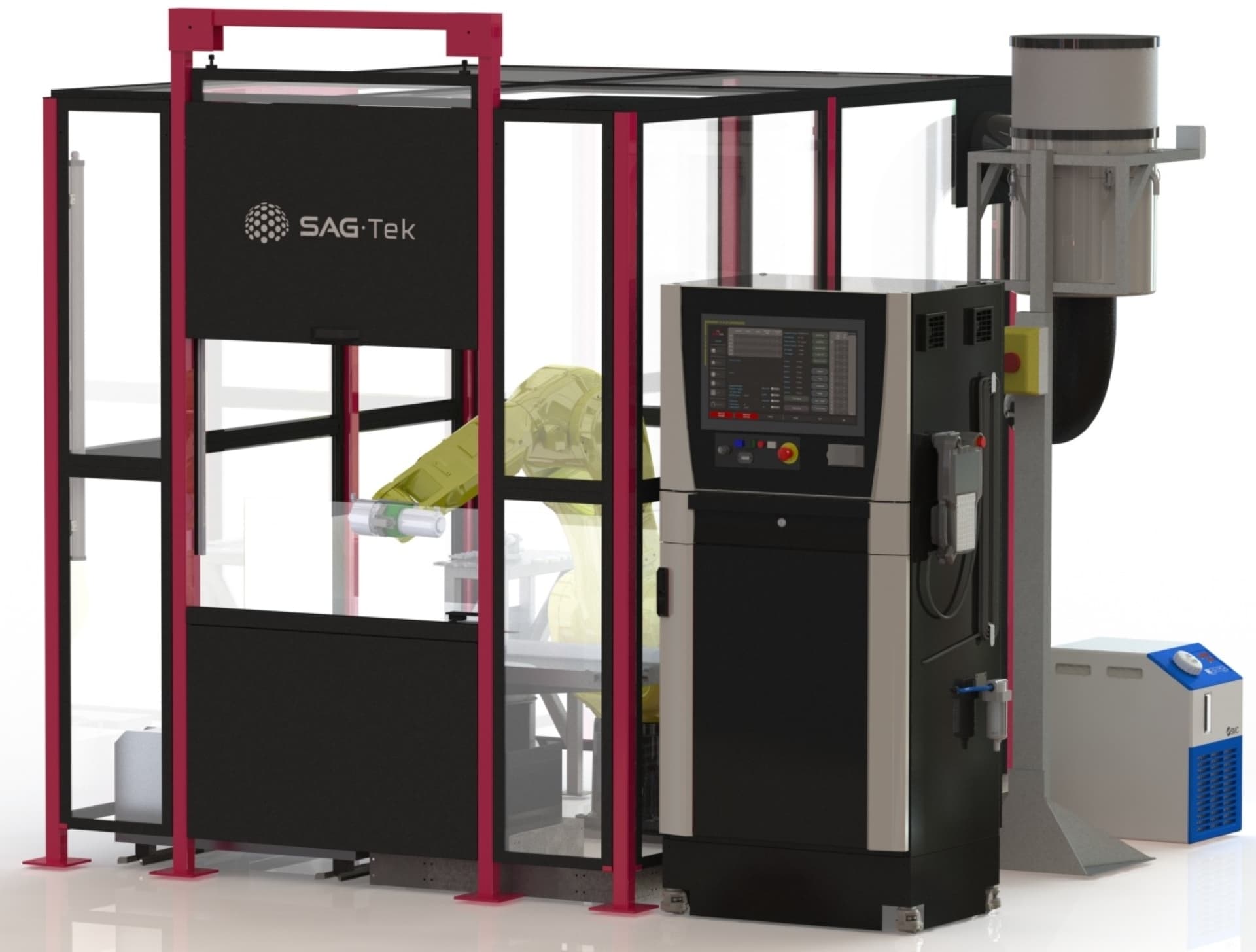
Precision Surface Finishing
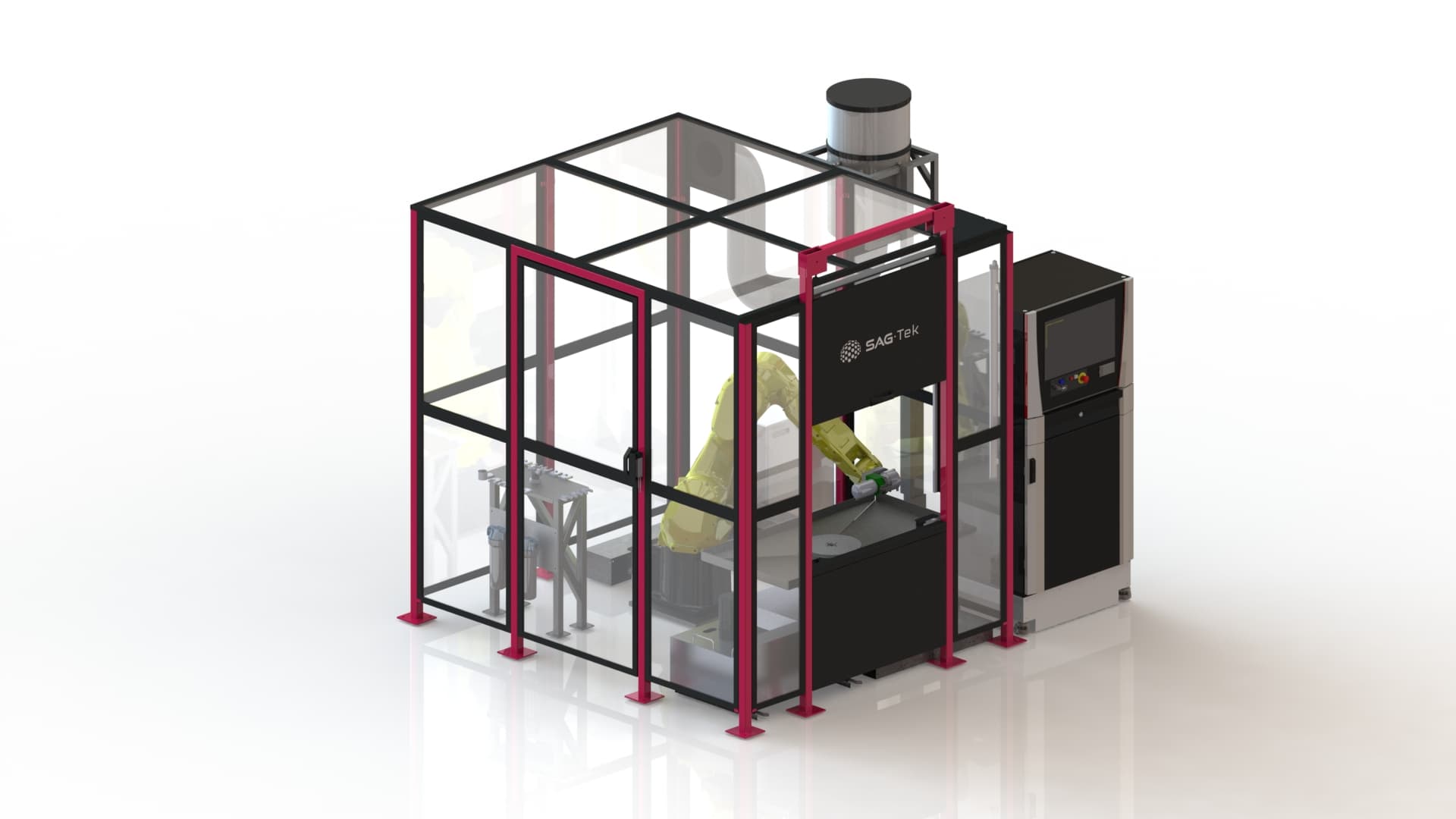
RPC systems combine 8-axis robotics, CNC motion control, and SAG tooling to deliver fully automated polishing workflows. Designed for industrial production environments where surface quality, repeatability, and throughput cannot be compromised.
Robotic polishing automation
Fully automated cell — no operator involvement during the polishing cycle.
8-axis robotic integration
8-axis robot arm with constant force tool for complex geometry access.
Consistent, repeatable surface finish
Achieve Ra < 0.01μm across every component in the batch, not just the first.
Reduced manual finishing time
Cut polishing cycle times by up to 60% compared to manual hand-finishing.
Production-ready process control
Closed-loop process monitoring with One-page.
Flexible part handling
Configurable fixture for components from 50mm to 1000mm+ across.
Typical Applications
RPC systems are deployed across advanced manufacturing sectors where surface finish directly affects component performance — from optical clarity and biocompatibility to aerodynamic efficiency and dimensional tolerance.
System Specification
Standard configuration parameters for the RPC platform. Custom configurations are available on request.
Request a datasheetCommon Questions
Can't find what you're looking for? Our engineering team is available to discuss your specific application.
Contact UsWhat materials can the RPC system finish?
The RPC is compatible with metals (titanium, aluminium, steel, nickel alloys), ceramics, glass, and silicon carbide. Tool selection is matched to the material and target roughness.
What surface roughness can the RPC achieve?
The system regularly achieves Ra < 0.01 μm (10 nm) on metallic and optical surfaces. Target roughness depends on starting condition, material, and tool selection.
How long does a typical polishing cycle take?
Cycle time depends on component geometry and starting surface condition. Compared to manual polishing, RPC reduces cycle time by approximately 60% on typical production components.
Can the RPC handle complex 3D geometries?
Yes. The 6-axis robotic integration, combined with SAG's compliant tooling, allows the system to access concave, convex, and freeform surfaces that rigid CNC tools cannot reach.
Is the system suitable for low-volume, high-value parts?
The RPC is equally effective for one-off high-value components and batch production. The process parameters are saved per part, so repeat runs require no re-programming.